
Disaster Recovery has become an important consideration for organizations that depend on technology to support daily operations. As digital environments continue to grow in scale and complexity, organizations must account for the possibility of events that can affect the availability of systems, applications, and data.
Understanding disaster recovery requires examining the principles, strategies, and assessment approaches that guide recovery planning and preparedness. This guide explores the fundamentals of disaster recovery and the key considerations involved in developing an effective recovery approach.
What is Disaster Recovery?
Disaster Recovery (DR) is a framework of policies, processes, technologies, and procedures designed to restore IT systems, applications, and data following a disruptive event. It provides a structured approach for recovering technology environments when incidents such as cyberattacks, infrastructure failures, natural disasters, or human errors affect normal operations.
To put this framework into practice, organizations develop disaster recovery plans and recovery procedures that define how recovery activities will be implemented and tested. While data backup is an important component, disaster recovery extends beyond backup and includes the systems, infrastructure, and operational processes involved in restoring IT environments.
Difference between Disaster Recovery and Business Continuity
Business continuity and disaster recovery are closely related disciplines that support organizational preparedness and response during disruptions. While they are often used together, they address different aspects of continuity planning.
Business continuity focuses on maintaining critical business functions and operational activities during a disruption. It addresses areas such as workforce readiness, communications, customer-facing services, and operational processes to ensure that essential activities can continue under adverse conditions.
Disaster recovery focuses specifically on the technology environment that supports those activities. It addresses the restoration of systems, applications, infrastructure, and data required for business operations. As a result, disaster recovery is typically considered a component of the broader business continuity framework.
Key Components of a Disaster Recovery Plan
A well-defined disaster recovery plan (DRP) is built on several core components that work together to ensure a structured and effective response during disruptions. Each element plays a specific role in minimizing impact and supporting quick recovery.
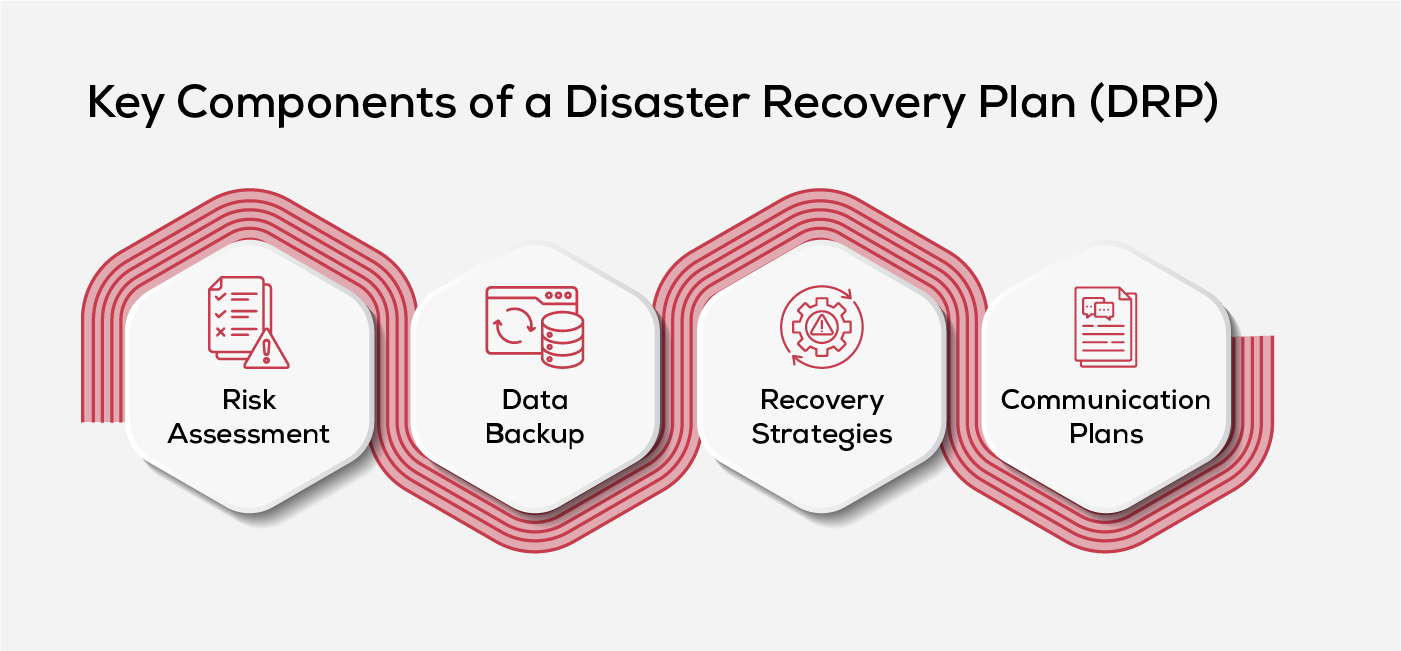
Risk Assessment
Risk assessment involves identifying the threats and vulnerabilities that could affect an organization's IT environment. This process is often supported by a business impact analysis, which helps determine how disruptions could affect critical systems, data, and business functions. The findings help organizations prioritize recovery requirements and allocate resources accordingly.
Data Backup
Data backup helps ensure that critical information can be recovered when required. Organizations typically maintain backup copies in both on-site and off-site locations to support data availability during disruptions. These backups are designed based on recovery requirements and the nature of the data being protected.
Recovery Strategies
Recovery strategies define how systems, applications, and infrastructure will be restored following a disruption. Organizations may adopt different approaches based on operational requirements, recovery objectives, and available resources. Common options include hot sites, cold sites, and cloud-based recovery environments, each offering different levels of readiness, flexibility, and implementation effort.
Communication Plans
Communication plans establish how information will be shared during and after an incident. They typically include notification procedures, contact lists, escalation paths, and guidelines for engaging internal teams, external partners, customers, and regulatory bodies. A well-defined communication plan helps ensure that stakeholders receive timely and consistent updates throughout the recovery process.
Key Metrics in Disaster Recovery
Disaster recovery metrics help organizations measure recovery requirements and assess preparedness for disruptive events. The following key metrics provide a framework for establishing timelines, data recovery objectives, and operational response targets.
Recovery Time Objective (RTO)
RTO refers to the maximum amount of time an organization can tolerate a system, application, or service being unavailable after a disruption. It defines how quickly systems need to be restored to avoid significant impact on business operations. Setting an appropriate RTO helps organizations prioritize critical systems and design recovery strategies accordingly.
Recovery Point Objective (RPO)
Recovery Point Objective (RPO) defines the maximum acceptable amount of data loss following a disruption. It is typically measured as a period of time and helps determine how frequently data should be backed up or replicated to meet recovery requirements.
Organizations may adopt backup practices such as the 3-2-1 rule, which recommends maintaining three copies of data, storing them on two different types of media or locations, and keeping one copy off-site.
Mean Time to Repair (MTTR)
Mean Time to Repair (MTTR) refers to the average time required to restore a system or service after a failure. It includes the time taken to detect the issue, diagnose the problem, and complete the repair or recovery process. MTTR is an important metric for assessing how effectively an organization can respond to incidents and minimize downtime.
Formula = Total downtime / Number of repairs
Mean Time to Detect (MTTD)
Mean Time to Detect (MTTD) measures the average time taken to identify an incident, fault, or service disruption after it occurs. It is commonly used to assess the effectiveness of monitoring and detection mechanisms, helping organizations understand how quickly issues can be identified and escalated for investigation.
Formula: MTTD = Total Detection Time ÷ Number of Incidents
Mean Time to Failure (MTTF)
Mean Time to Failure (MTTF) measures the average operating time of a system, device, or component before a failure occurs. It is used to evaluate reliability and estimate the expected lifespan of technology assets.
Formula: MTTF = Total Operating Time ÷ Number of Failures
Building a Disaster Recovery Strategy
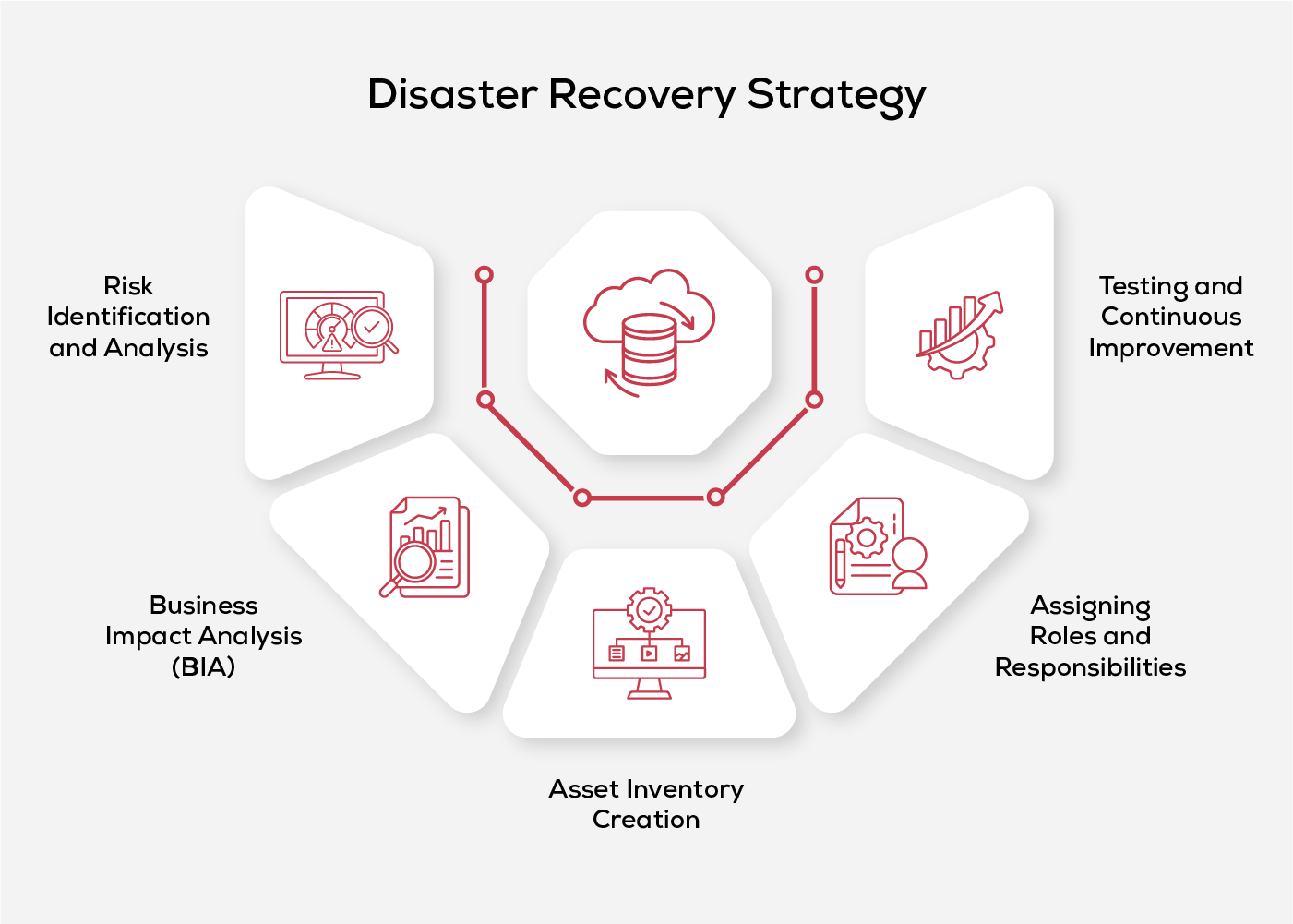
Developing a disaster recovery strategy involves assessing recovery requirements, reviewing operational dependencies, and outlining the processes needed to restore critical services. The following steps provide a foundation for designing, implementing, and maintaining an effective recovery approach.
1. Risk Identification and Analysis
The first step in developing a disaster recovery strategy is understanding the threats and vulnerabilities that could affect the organization's IT environment. Assessing the likelihood of potential incidents and their impact on business functions helps prioritize risks and direct resources toward areas that require greater protection and preparedness.
2. Business Impact Analysis (BIA)
A Business Impact Analysis (BIA) examines the potential effects of disruptions on business operations and highlights the functions, systems, and processes that require priority during recovery. It considers factors such as revenue loss, downtime costs, operational dependencies, recovery expenses, reputational impact, and potential compliance-related penalties. The findings support recovery planning by providing a clearer understanding of organizational priorities.
3. Asset Inventory Creation
Disaster recovery planning requires a clear understanding of organizational assets, including hardware, software, infrastructure, applications, and data. These assets can be categorized based on their importance to business operations.
Critical assets are essential to day-to-day operations and require the highest recovery priority. Important assets support business functions and may have a moderate impact if unavailable. Non-critical assets have limited operational impact and can generally be restored at a later stage.
4. Assigning Roles and Responsibilities
Clearly defined roles and responsibilities help ensure an organized response during an incident. Assigning ownership for key recovery activities reduces uncertainty and enables teams to coordinate effectively when executing recovery plans.
Key responsibilities often include incident coordination, stakeholder communication, recovery management, and oversight of critical systems and resources.
5. Testing and Continuous Improvement
Disaster recovery strategies should be reviewed and updated regularly to reflect changes in technology environments, business requirements, and risk conditions. Testing verifies recovery procedures, uncovers gaps, and measures whether recovery objectives can be achieved as planned.
Organizations can conduct simulations that reflect realistic disruption scenarios, review response effectiveness, and verify system and data restoration processes. Insights gained from these exercises can be used to refine procedures and strengthen overall recovery readiness.
Understanding Disaster Recovery Assessment
A disaster recovery assessment is a structured evaluation of an organization's disaster recovery plans, processes, and IT infrastructure. It examines whether existing recovery measures are aligned with business requirements and capable of meeting defined recovery objectives. The assessment may include a review of technology assets, system dependencies, recovery procedures, testing practices, and resource readiness.
By providing an objective view of the current disaster recovery program, assessments help uncover gaps, weaknesses, and outdated practices that may affect recovery performance. They also support compliance and governance efforts by verifying that policies, procedures, and controls remain current. The findings can be used to refine existing plans and drive ongoing improvement initiatives.
Best Practices for Effective Disaster Recovery
The effectiveness of a disaster recovery program depends on how well its processes, technologies, and governance practices are maintained over time. The following practices can help strengthen long-term recovery capabilities.
1. Automate backups and failovers
Automating backup and failover processes helps improve consistency and reduce reliance on manual intervention. Automated mechanisms can support timely data protection, streamline recovery activities, and enable faster transitions to alternate environments when required.
Train employees.
2. Train employees regularly
Regular training helps ensure that personnel involved in recovery activities understand their responsibilities and are familiar with documented procedures. Tabletop exercises can be used to reinforce recovery workflows, communication protocols, and escalation paths while helping teams build confidence in executing their assigned roles.
3. Implement multi-location redundancy
By distributing data and applications across multiple regions or data centers, organizations can continue operations even if one location becomes unavailable. This approach reduces the risk of a single point of failure and supports faster recovery by providing alternative environments ready for use.
4. Integrate DR with business continuity planning
Disaster recovery planning should be aligned with broader business continuity objectives. Coordinating recovery priorities, communication plans, and operational requirements help in technology restoration efforts and support overall business needs.
Conclusion
The effectiveness of disaster recovery is not measured by the existence of a plan, but by an organization's ability to execute that plan when it matters most. Recovery objectives, processes, technologies, and governance mechanisms must work together to support a coordinated response when critical systems are affected.
As organizations continue to expand their digital footprint, disaster recovery should be treated as an integral part of operational planning rather than a standalone IT initiative. A structured and regularly validated approach can help organizations maintain service reliability, protect business-critical assets, and adapt to changing operational requirements.
At Inspirisys, we help organizations design, implement, and optimize disaster recovery solutions aligned with their operational and technology requirements. From backup and recovery infrastructure to high-availability architectures and managed DR services, our expertise enables businesses to build a robust foundation for continuity in an increasingly digital environment.

Frequently Asked Questions
1. How often should a disaster recovery plan be reviewed?
A disaster recovery plan should be reviewed at least once or twice a year, or whenever significant changes are made to infrastructure, applications, business processes, or compliance requirements. Regular reviews help ensure that recovery procedures remain accurate and relevant.
2. Who should be involved in disaster recovery planning?
Disaster recovery planning should involve cross-functional teams, including IT, operations, security, and business leadership. This ensures the plan reflects both technical and business priorities and can be executed effectively during an incident.
3. What is the difference between backups and replication in disaster recovery?
Backups involve storing copies of data at specific intervals, while replication continuously copies data to another location in near real time. Replication supports faster recovery, whereas backups provide more flexibility for restoring earlier data states.
4. Can small businesses benefit from disaster recovery strategies?
Yes, disaster recovery is important for businesses of all sizes. Small businesses can adopt cost-effective solutions such as cloud-based recovery or managed services to protect their data and maintain continuity during disruptions.
5. What role does cloud computing play in disaster recovery?
Cloud computing provides scalable and flexible recovery options, allowing organizations to store backups, run failover systems, and recover operations without relying entirely on physical infrastructure.