
Regulatory compliance software has become a non-negotiable foundation for organizations in 2026, as industries face faster updates, tighter scrutiny, and an unprecedented volume of obligations. Businesses today must navigate evolving rules across finance, banking, insurance, healthcare, telecom, manufacturing, and IT services, often with consequences that go far beyond penalties. What once depended on spreadsheets and manual coordination now demands real-time oversight, automated control mapping, and absolute audit readiness.
With regulatory bodies introducing more dynamic, data-driven expectations, companies are turning toward platforms that simplify complexity, centralize evidence, and reduce the risk of oversight. This article explores the top regulatory compliance software solutions leading the way in 2026 and what makes them essential for modern governance.
Why Businesses Need Regulatory Compliance Software in 2026?
As organisations deal with heavier governance demands, more data-driven audits, and increasingly dynamic regulations, Regulatory Compliance Software is more important than ever before. Beyond meeting legal requirements, these platforms deliver practical advantages that strengthen operations, reduce risk, and improve overall compliance maturity.
Here are the key benefits businesses gain from adopting modern compliance software:
1. Unified Regulatory Compliance View
Regulatory requirements often come from multiple agencies and bodies, each with its own deadlines, controls, and documentation standards. Without a unified system, these obligations end up scattered across emails, spreadsheets, and individual teams creating gaps and inconsistencies.
Regulatory compliance software provides a single source of truth for all regulatory obligations, allowing organisations to:
- assign ownership for each compliance requirement
- maintain evidence and documentation centrally
- avoid duplication, conflicts, and missed updates
Structuring compliance ensures it is traceable and aligned with regulatory expectations, instead of being fragmented across business units.
2. Enhancing Accuracy and Reducing Human Error
Manual compliance work is prone to version mismatches, missed deadlines, outdated templates, and incomplete evidence. When regulations tighten and audit cycles speed up, these errors become costly.
Compliance software helps organisations maintain accuracy through:
- Automated evidence gathering
- Real-time dashboards
- Pre-defined regulatory templates
- Built-in validation checks
- Machine-readable audit trails
The result not only improves reliability but also creates a consistent, repeatable compliance process that can withstand scrutiny.
3. Improving Audit Readiness and Response Time
Regulators now expect faster responses, clearer documentation, and complete audit histories. Without automation, preparing for audits often becomes a scramble.
Compliance software strengthens audit readiness by:
- Generating audit reports instantly
- Storing version-controlled documents
- Maintaining chronological evidence trails
- Tracking all approvals and sign-offs
The outcome reduces the stress, risk, and time spent during regulatory audits.
4. Enabling Scalable Compliance as the Business Grows
As organisations expand, enter new markets, onboard more customers, or increase digital services their compliance load multiplies.
Regulatory compliance software supports scalability through:
- Automated onboarding checks (KYC, data consent, authorisations)
- Multi-jurisdictional rule mapping
- Configurable workflows for new business units
- Ability to handle larger data and compliance volumes without additional people
- Standardised processes that grow with the organisation
This ensures growth does not expose the business to new risks or compliance gaps.
5. Strengthening Risk Management and Decision-Making
Modern compliance is deeply tied to enterprise risk management. Compliance software bridges this gap by offering:
- Early identification of control failures
- Real-time risk scoring and impact mapping
- Integration with audit and incident management systems
- Insights into trends, patterns, and recurring compliance issues
The resulting clarity enables leadership to make decisions based on transparent, data-driven insights, not assumptions or outdated reports.
6. Reducing Legal, Financial, and Reputational Exposure
Ultimately, the financial and reputational cost of non-compliance is rising. Regulatory compliance software minimises exposure by ensuring:
- Timely adherence to all applicable laws
- Accurate reporting and evidence
- Complete visibility into gaps and violations
- Well-documented efforts toward compliance
- Strong defence during investigations or disputes
Ultimately making the organization more resilient and trustworthy to regulators, customers, and partners.
Core Capabilities of Leading Compliance Software
Effective regulatory compliance depends on how well a platform supports regulatory tracking, documentation, risk oversight, and audits. These core capabilities distinguish robust compliance systems from basic tracking tools.
1. Real-Time Regulatory Monitoring
In a fast-evolving rulebook, real-time regulatory monitoring is indispensable. This feature continuously scans for regulatory updates across multiple jurisdictions and automatically alerts teams to changes that may affect policies, controls, or reporting requirements.
Whether it’s a revision to GDPR, a new clause under the DPDP Act, or an update from financial regulators like RBI or SEBI, instant alerts help organisations stay ahead of compliance obligations and avoid delays that could lead to penalties.
2. Automated Compliance Reporting
Manual reporting is slow and unsustainable for organisations managing extensive regulatory workloads. Automated compliance reporting gathers evidence, validates data, and generates audit-ready reports with minimal manual intervention.
This ensures accuracy, improves preparedness for audits and inspections, and frees teams from repetitive documentation tasks. Platforms with pre-built reporting templates help accelerate submissions for financial, cyber, and data protection audits.
3. Customisable Regulatory Templates
A one-size-fits-all approach fails in a multi-industry environment. Leading platforms offer customisable compliance templates aligned with industry frameworks such as ISO 27001, SOX, PCI-DSS, HIPAA, and sector-specific financial regulations.
Customization ensures that organisations can tailor controls, workflows, and evidence requirements to their unique regulatory environment, improving relevance and adoption across teams.
4. Comprehensive Audit Trails
Audit transparency is non-negotiable. Comprehensive audit trails maintain a chronological record of all compliance activities, including document changes, approvals, user actions, policy updates, and evidence uploads.
This traceability helps organisations demonstrate compliance confidently, respond faster during audits, and identify process gaps before they escalate into violations.
5. Integrated Risk Management
Modern software integrates regulatory workflows with risk management capabilities, enabling organisations to evaluate compliance risks in real time.
Features like risk scoring, impact analysis, and automated control mapping help identify areas of non-compliance early and provide recommended actions. This proactive approach strengthens overall governance and reduces the likelihood of regulatory breaches.
6. AI-Driven Document Analysis & Summarisation
AI has become a defining capability in 2026.Platforms equipped with AI-powered document analysis can interpret regulatory documents, highlight changes, summarise obligations, and map clauses to internal controls automatically.
This significantly reduces dependency on manual interpretation and accelerates compliance decision-making.
7. Policy Lifecycle Management
Compliance requires a structured, repeatable policy process. Policy lifecycle management ensures organisations can create, review, update, publish, and retire policies efficiently, while maintaining full version history and stakeholder approvals.
This feature is particularly valuable for large enterprises where policies often span multiple departments and need periodic updates based on regulatory changes.
8. Seamless Integrations with Enterprise Systems
Effective compliance relies on connected data. Top platforms integrate with systems such as:
- ERP
- IAM
- HRMS
- Ticketing tools
- Cloud platforms (AWS, Azure, GCP)
- Security tools (SIEM, DLP, IAM)
These integrations consolidate evidence, automate control testing, and unify compliance workflows across the organisation.
9. User-Friendly Interface with Role-Based Access
Ease of use drives adoption. A user-friendly interface, combined with Role-Based Access controls (RBAC), ensures that compliance owners, auditors, executives, and external stakeholders can navigate the system effortlessly.
Clear dashboards, guided workflows, and intuitive navigation reduce onboarding time and make compliance a part of daily operations.
10. Secure Data Management
Given the sensitivity of regulatory documentation, strong data security is essential. Compliance software must support these protections safeguard the organisation’s regulatory data and help maintain trust with regulators, partners, and customers:
- Advanced encryption
- Access controls & MFA
- Data retention rules
- Secure evidence storage
- Compliance with privacy laws (GDPR, DPDP Act, CCPA)
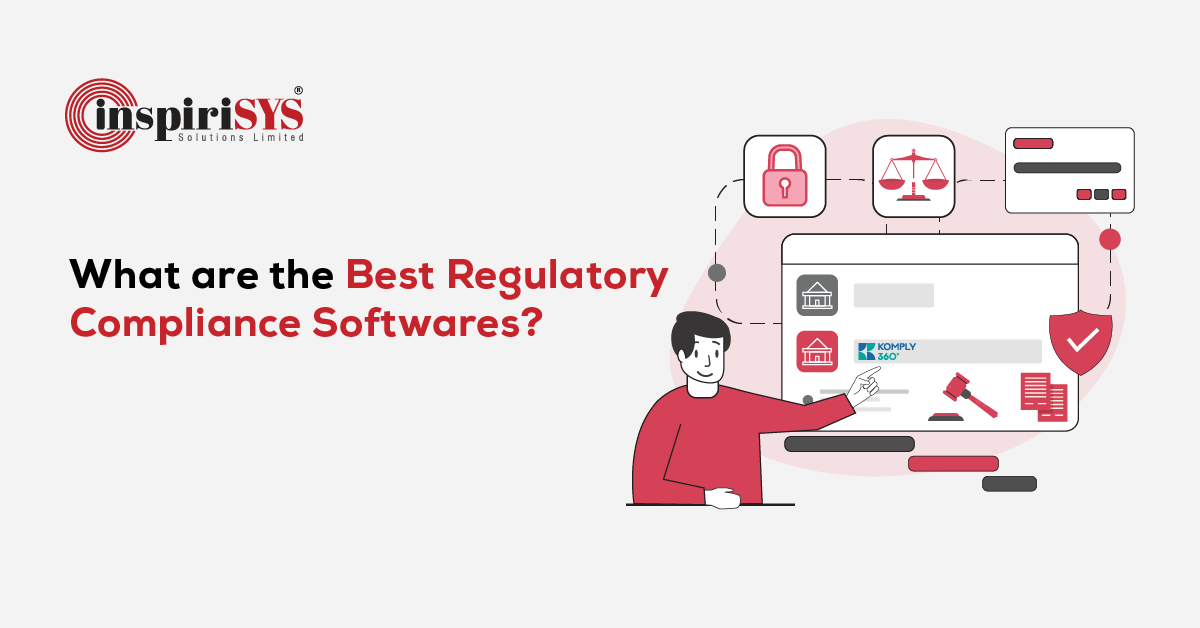
Top Regulatory Compliance Software in 2026
With regulations becoming more dynamic, businesses need reliable platforms that simplify compliance and strengthen governance. These are the leading solutions in 2026.
Komply360
Komply360 is a regulatory compliance management system primarily designed to address the complex oversight needs of banking and financial institutions. As platform tailored for complex regulatory environments (especially BFSI and NBFCs in India), it centralises obligations, automates workflows, and delivers real-time tracking across jurisdictions. With built-in AI assistance and branch-level visibility, it’s designed for the scale of modern enterprises.
MetricStream
As a global leader in Governance, Risk, and Compliance (GRC), MetricStream provides integrated compliance, audit, and risk management modules tailored for large enterprises. The platform is widely adopted across high-compliance sectors, including Banking and Financial Services (BFSI), healthcare, manufacturing, and government.
IBM OpenPages
IBM’s OpenPages is known for its AI-driven compliance intelligence powered by Watson. It supports regulatory frameworks, financial compliance, operational risk, model validation, and automated reporting. Ideal for multinational corporations with complex controls and large audit cycles.
OneTrust
A global compliance leader for privacy, ESG, ethics, and third-party risk, OneTrust is widely used for GDPR, CCPA, ISO 27701, and privacy governance. It offers deep regulatory libraries, consent management, and assessment automation. Strong in highly data-driven businesses.
Vanta
Recognised globally for automating security and trust-related compliance (SOC 2, ISO 27001, GDPR, HIPAA), Vanta is widely adopted in mid-to-large scale enterprises. It integrates with cloud environments and emphasises continuous monitoring and vendor risk.
Fenergo
Best suited for financial institutions, Fenergo offers a “FinCrime Operating System” that covers KYC, AML/CTF, client lifecycle management, transaction monitoring and compliance across 120+ jurisdictions.
VComply
A flexible cloud-based GRC and compliance platform that offers dashboards, workflow management, risk modules and regulatory libraries. It works well for organisations seeking agile, industry-agnostic compliance capability, especially in distributed environments.
Regly
A newer but highly capable RegTech platform focused on automation, AI-driven compliance tasks and financial-crime risk mitigation, it is designed for fast-moving organisations in fintech and regulated markets.
The Complete Checklist for Selecting Regulatory Compliance Software
Selecting the right regulatory compliance software becomes much easier when you focus on what truly matters to your business. Instead of comparing long feature lists, the decision should come down to how well the platform fits your regulatory environment, your operational workflows, and the way your teams work every day.
Here are a few practical considerations to guide your evaluation:
1. Identify your regulatory compliance requirements
Every organisation has a different regulatory focus. Some deal with strict financial rules, while others follow data protection, cybersecurity, or multi-jurisdictional mandates.
Choose a platform that aligns with:
- The regulators you fall under,
- The type of compliance activities you perform most, and
- The level of documentation and reporting expected from your industry.
A tool designed for your sector will always be more effective than a generic, one-size-fits-all system.
2. Select a software that fits your workflows
The right software should fit into the way your teams already operate. Instead of adjusting your processes to match the tool, look for a platform that supports your existing structure, whether you are centralised, multi-branch, or cross-functional.
A good regulatory platform makes it easy for different teams to contribute, track responsibilities, and work with the same information without confusion or duplication.
3. Compare cost with long-term value
Cost matters, but value matters more. Rather than comparing price tags alone, assess whether the software will still serve your needs two or three years down the line.
A slightly higher investment may be worthwhile if it:
- Reduces manual effort,
- Improves accuracy, or
- Adapts easily as regulations grow more complex.
Think long-term, not just immediate affordability.
4. Check Integration Support
Integration is about practicality. Your compliance software should work smoothly with the tools you already rely on, whether that's HR systems, document repositories, risk tools, or communication platforms. When information flows easily between systems, compliance becomes far more structured and less time-consuming.
5. Ensure the Platform Can Scale Your Business
Regulatory responsibilities rarely stay the same. As your organisation expands, new services, markets, or customer segments will introduce new compliance requirements. Select software that can extend its capabilities as you grow, without needing a complete replacement or major overhaul.
How can Inspirisys Help?
Regulatory work becomes easier when the right structure is in place. Inspirisys supports banks, NBFCs and large organisations by bringing clarity to how regulatory compliance tasks are organised, monitored and maintained. Our teams understand the practical challenges that arise in regulated environments and help businesses build processes that stay consistent even as requirements change.
Komply360 fits into this approach by offering a focused platform to manage regulatory obligations in an organised and predictable manner. It helps teams keep track of updates, maintain the right documents and stay prepared for audits without disrupting daily operations. With Inspirisys, organisations gain a steady partner who ensures their compliance practices remain clear, coordinated and ready for what comes next.
Frequently Asked Questions
1. What is regulatory compliance?
Regulatory compliance is the process of ensuring an organisation follows laws, guidelines and industry standards set by regulatory authorities. It helps maintain accountability, transparency and responsible operations.
2. What is regulatory compliance and risk management?
Regulatory compliance ensures adherence to external rules, while risk management identifies and addresses risks that could affect compliance or business operations. Together, they help organisations operate safely and lawfully.
3. How does regulatory compliance help in banking?
Regulatory compliance helps banks operate safely by preventing financial fraud, protecting customer data, ensuring fair practices and maintaining stability within the financial system. It builds trust, reduces risk and keeps banks aligned with mandatory guidelines from regulators.
4. What tools help automate compliance?
Compliance automation tools include regulatory compliance software, GRC platforms, policy management systems, audit tools, KYC/AML platforms and solutions that track regulatory updates and generate reports automatically.
5. What are the penalties for noncompliance?
Penalties vary by regulation but may include fines, legal action, licence suspension, operational restrictions and reputational damage. In severe cases, noncompliance can halt business operations.