
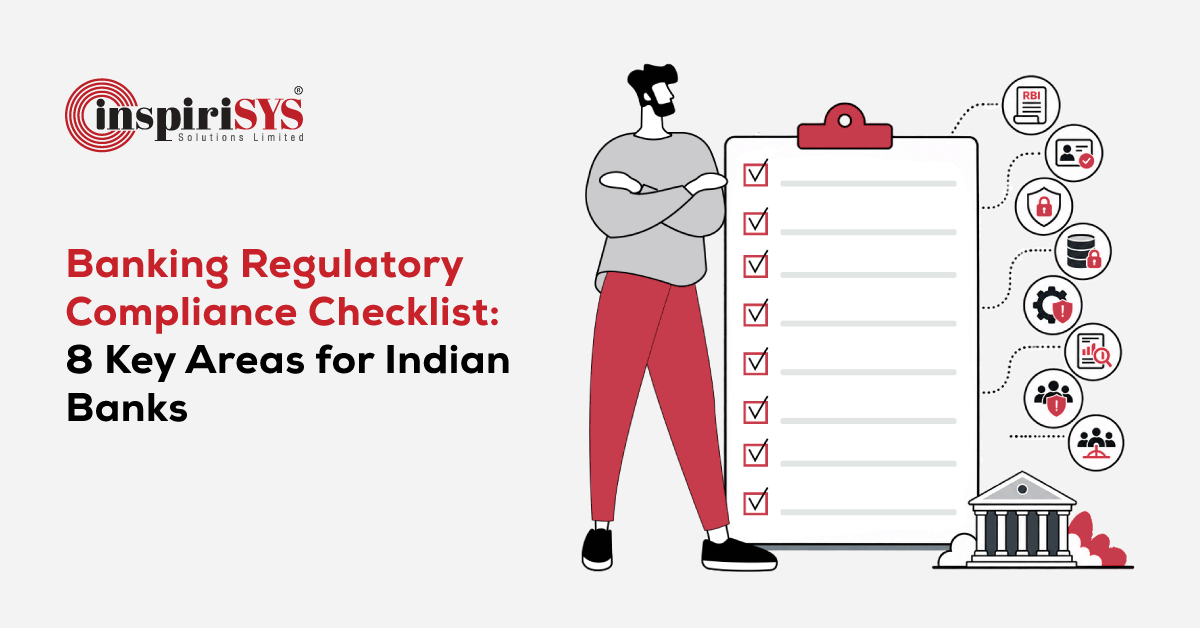
Banks today face an increasingly complex regulatory environment, with requirements spanning prudential regulation, governance, risk management, technology, cybersecurity, financial crime compliance, and customer protection. While the Reserve Bank of India (RBI) serves as the primary regulator, additional obligations from bodies such as FIU-IND and CERT-In further expand the compliance landscape. Against this backdrop, leadership must have clear visibility into whether each regulatory requirement is adequately addressed through documented processes, effective controls, designated accountability and reliable evidence of compliance.
A regulatory compliance review should therefore examine how requirements are being managed across the institution, where control weaknesses could create exposure, and whether issues are being identified and addressed before they become regulatory findings.
This checklist is created with the intention to help senior leaders review the strength of their compliance arrangements and identify where closer attention may be warranted.
1. Regulatory Obligation and Risk Landscape
A compliance checklist is only as strong as the institution's understanding of the regulations that apply to its business. For banks in India, this includes requirements issued by the Reserve Bank of India (RBI), along with obligations from other authorities such as SEBI, IRDAI, PFRDA, FIU-IND and CERT-In. The applicable regulatory requirements depend on the institution's activities, products and group structure.
The starting point is to establish a clear view of these obligations, understand where they apply, and map them to the relevant policies, processes and controls. This helps identify gaps, overlaps and emerging regulatory risks, ensuring compliance requirements are effectively embedded across the organization.
2. Compliance Governance and Accountability
Effective compliance requires clear accountability, independent oversight and robust governance. Business functions should remain accountable for managing compliance risks, while the compliance function provides independent challenge and oversight. Roles and responsibilities must be clearly defined, supported by effective escalation processes, regular reporting to the Board and senior management and documented decision-making. A defined compliance risk appetite further helps establish clear boundaries and guide responses to emerging compliance issues.
3. Risk-Based Compliance and Control Effectiveness
A strong control environment is about how they address the risks they are meant to manage. Compliance risk assessments should consider both the potential impact and likelihood of risk, while control reviews should look at how well controls are designed and how consistently they operate in practice.
Risk-based testing helps focus attention on controls where weaknesses could have the greatest impact. Where primary controls are not fully effective, compensating controls should be evaluated to determine whether they provide adequate coverage. Together, these assessments provide a clearer view of residual risk, or the level of risk that remains after controls have been applied.
4. Data, Reporting and Regulatory Returns
Regulatory reporting depends on the quality and reliability of data drawn from across the institution. For senior executives, the concern is whether reported information can be trusted, reconciled to its source and supported when challenged. Clear data ownership and lineage help establish where information comes from and who is accountable for it.
Data quality checks, reconciliation and validation should be built into the reporting process to catch material discrepancies before submission. Regulatory returns should also be traceable from source data and calculations through to the final submission, with supporting evidence retained for review. When reporting requirements change, the impact on data, systems and calculations should be assessed before implementation.
5. Technology, Cybersecurity and Digital Compliance
Technology risk can quickly become regulatory risk when critical banking services, customer access or sensitive information are affected. The technology environment needs to support applicable RBI technology and cybersecurity requirements, along with CERT-In obligations and data protection requirements under the Digital Personal Data Protection (DPDP) Act.
This includes appropriate identity and access controls for users, privileged accounts and third parties, along with cybersecurity measures that protect critical systems and information. Monitoring and audit trails should provide visibility into significant events, while application and infrastructure controls should remain effective as systems change.
Technology resilience also needs to support the continuity and recovery of critical services, including those delivered through cloud and digital environments. For decision-makers, the key consideration is whether technology weaknesses could translate into service disruption, regulatory breaches, customer impact or loss of control.
6. Customer, Financial Crime and Conduct Obligations
Customer and financial-crime risks can have direct regulatory, financial and reputational consequences. RBI requirements on KYC and customer protection, along with FIU-IND obligations relating to AML/CFT reporting, form important parts of this compliance environment. Sanctions, fraud and customer conduct also need to work as connected parts of the bank’s risk management approach.
The strength of this framework depends on how well it identifies changes in customer risk throughout the relationship and connects information across onboarding, transactions, payments and digital channels. Higher-risk activity should receive appropriate scrutiny, while customer complaints and conduct issues can provide additional signals of emerging concerns. Taken together, these areas should give the institution a timely view of risks that could affect customers, financial-crime exposure or regulatory standing.
7. Third-Party, Outsourcing and Ecosystem Risk
External providers can become part of the bank's critical operating infrastructure, whether they support technology, customer services, payments or specialised functions. As these dependencies grow, the associated regulatory responsibility remains with the bank. RBI’s outsourcing requirements also make clear that engaging a service provider does not reduce the bank’s responsibility for meeting its regulatory obligations or limit supervisory oversight.
Third-party arrangements should therefore be assessed before engagement and governed through appropriate contractual safeguards, clear responsibilities and ongoing oversight. Particular attention is warranted where the bank depends heavily on a single provider, platform or service category, as disruption can have wider operational and regulatory consequences. For critical outsourced services, viable contingency and exit arrangements also matter, particularly where replacing a provider may take significant time or require substantial changes to the operating model.
8. Monitoring, Testing, Evidence and Regulatory Readiness
A compliance framework needs to provide visibility between formal regulatory reviews, not just when an examination is underway. Regular monitoring and independent assurance help identify issues, while well-maintained evidence allows the institution to substantiate how compliance requirements have been addressed.
The real test comes when a regulator asks for information, challenges a control or examines a past decision. Records should allow the institution to establish what was done, when it was done, who was responsible and how significant issues were addressed. Findings should also be tracked through to closure, with evidence supporting the actions taken. This level of preparedness reduces the time and uncertainty involved in responding to regulatory examinations and information requests.
From Assessment to Continuous Compliance
A compliance checklist has limited value if it ends with a completed document. Its real value emerges when the findings move through a defined cycle: assess, identify, prioritise, remediate, monitor and validate. Repeating this cycle gives leadership a way to track how the compliance environment is changing, whether corrective action is producing the intended results and where attention may be needed next.
Regulatory compliance also cannot be sustained within one function or system. People, processes, technology, data and governance must work in concert, particularly as banking operations, products and regulatory requirements change. Used as part of regular management review, the checklist becomes a practical reference for maintaining that alignment rather than a one-time exercise.
Frequently Asked Questions
1. What is the RBI timeline for reporting cybersecurity incidents?
RBI requires regulated entities covered by its IT Governance Directions to proactively report cyber incidents to RBI and CERT-In as per applicable regulatory requirements. For banks, RBI has specified reporting of cyber incidents to RBI within 6 hours of detection; the incident should also be analysed for severity, impact and root cause.
2. What are the consequences of regulatory compliance gaps for banks?
Regulatory compliance gaps can lead to supervisory action, financial penalties, remediation costs and closer regulatory scrutiny. Depending on the nature and severity of the issue, they can also affect customer trust, operational continuity and the institution’s reputation. The wider impact often depends on how quickly the gap is identified, escalated and addressed.
3. How can banks identify weaknesses in their regulatory compliance framework?
Banks can identify weaknesses by assessing whether regulatory requirements are adequately covered, controls are working as intended, reporting data is reliable, responsibilities are clear and sufficient evidence exists to support compliance. Reviewing findings across functions can also reveal recurring issues, control dependencies and areas where changes in the business or regulatory environment may have created new exposure.